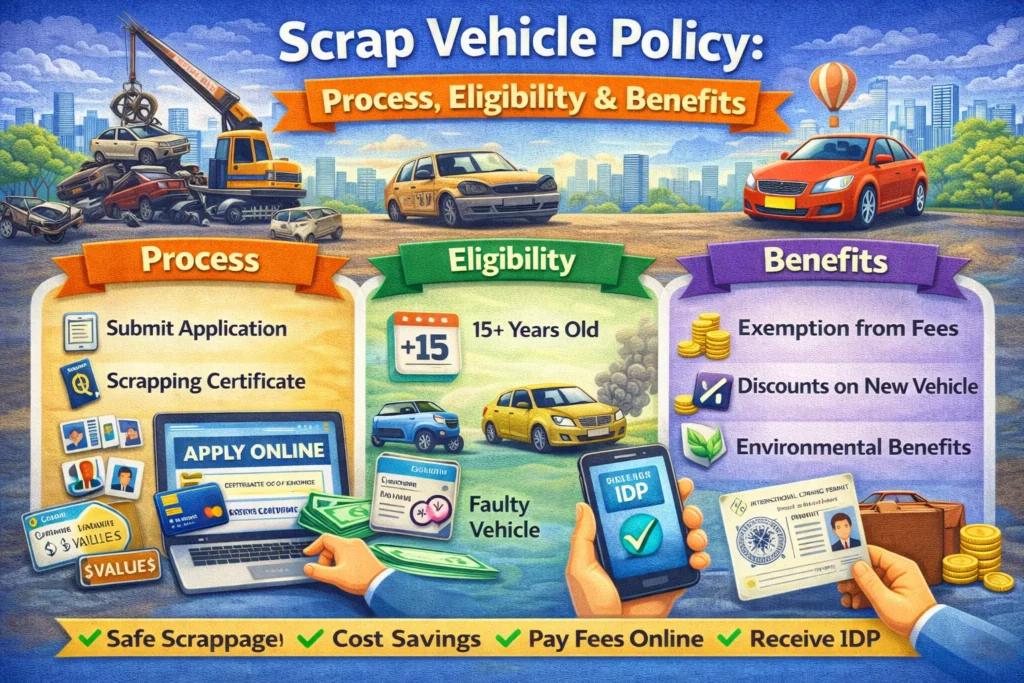
Scrap Vehicle Policy: Process, Eligibility & Benefits
The Scrap Vehicle Policy, also known as the Vehicle Scrappage Policy, is a government initiative aimed at removing old, unfit, and polluting vehicles from roads. The policy encourages vehicle owners to voluntarily scrap their end-of-life vehicles and replace them with newer, safer, and more environmentally friendly models.
With rising pollution levels and road safety concerns, understanding the vehicle scrap policy, eligibility rules, scrapping process, and benefits has become essential for every vehicle owner. This detailed guide explains everything in simple language. Parivahan Seewa
What Is Scrap Vehicle Policy?
The Scrap Vehicle Policy is a structured framework that allows vehicle owners to scrap vehicles that have completed their usable life. The policy focuses on:
Instead of forcefully banning vehicles, the policy follows a voluntary scrapping model with incentives.
Why the Scrap Vehicle Policy Was Introduced
Older vehicles contribute significantly to environmental and safety problems.
Key Reasons Behind the Policy
Scrapping such vehicles helps create a cleaner and safer transport ecosystem.
Eligibility for Scrap Vehicle Policy
Not all vehicles are immediately eligible for scrapping. Eligibility depends on vehicle type and age.
Vehicle Age Criteria
Fitness Test Failure
Vehicles failing the mandatory fitness test are considered unfit and become eligible for scrapping.
Types of Vehicles Covered Under the Scrappage Policy
The policy applies to:
Defense vehicles are generally exempt under specific conditions.
Vehicle Fitness Test Explained
The fitness test determines whether a vehicle is roadworthy.
What Is Checked During a Fitness Test?
Vehicles failing this test must be scrapped or deregistered.
Scrap Vehicle Policy Online: Step-by-Step Process
Scrapping a vehicle is now a transparent and regulated process.
Step 1: Identify Authorized Vehicle Scrapping Facility
Choose a government-authorized vehicle scrapping center.
Step 2: Submit Vehicle for Scrapping
Provide vehicle details and documents at the scrapping facility.
Step 3: Vehicle Inspection
The scrapping facility verifies vehicle identity and ownership.
Step 4: Deregistration of Vehicle
The RTO deregisters the vehicle from official records.
Step 5: Issuance of Certificate of Vehicle Scrapping
A Scrapping Certificate is issued after destruction.
Step 6: Avail Incentives
Use the scrapping certificate to claim benefits on a new vehicle purchase.
Documents Required for Vehicle Scrapping
Additional documents may be required in special cases.
Benefits of Scrap Vehicle Policy
Environmental Benefits
Financial Benefits
Safety Benefits
Economic Benefits
Incentives Under Scrap Vehicle Policy
Vehicle owners can receive multiple incentives.
Common Incentives Include
Actual incentives may vary by state and manufacturer.
Scrap Vehicle Certificate: Importance
The Scrapping Certificate is a crucial document.
Why It Matters
Always keep this certificate safe.
What Happens to Scrapped Vehicles?
After scrapping:
This supports a circular economy.
Common Issues During Vehicle Scrapping
Missing RC or Documents
Incomplete documents may delay scrapping.
Unauthorized Scraping Centers
Scrapping at unapproved centers can cause legal issues.
Pending Dues or Loans
Vehicles with pending loans must be cleared before scrapping.
Tips for Hassle-Free Vehicle Scrapping
Frequently Asked Questions (FAQs)
Final Words
The Scrap Vehicle Policy is a progressive step toward cleaner roads, safer vehicles, and a sustainable environment. By understanding eligibility, the scrapping process, and available benefits, vehicle owners can make informed decisions.
Scrapping an old vehicle not only offers financial advantages but also contributes positively to environmental protection and road safety. Always follow the official process and choose authorized facilities for a smooth experience.